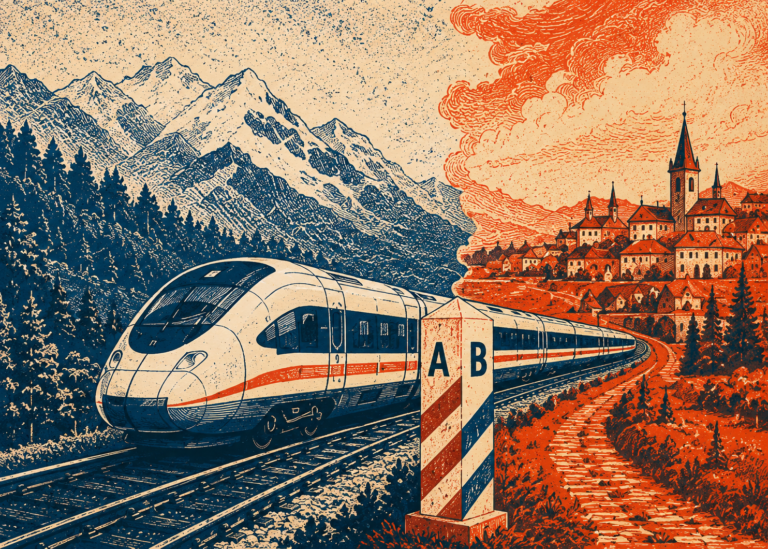
Driving a car across European borders is effortless — same vehicle, same driver, no technical modifications needed.
Trains? Not so simple.
Europe’s rail network operates on over 40 different national signaling systems, each developed independently with unique hardware, software, and operational rules. A train crossing from the Netherlands to Belgium doesn’t just change countries — it changes technical languages entirely.
Unlike cars, which require no communication with road infrastructure, trains depend on sophisticated signaling systems that actively monitor speed, driver response, and safety conditions. When these systems are incompatible — as most are — trains must carry multiple sets of equipment, each calibrated to a different national standard.
A locomotive operating internationally might need separate antennas for Dutch ATB, Belgian TBL1+, and ETCS, along with the corresponding software and trained staff to manage transitions.
This fragmentation creates a railway version of the Tower of Babel.
The same journey that takes minutes by car can require extensive technical preparation, regulatory approvals, and operational adjustments for trains. It’s a problem born from decades of independent development, and one that ETCS is designed to solve — though the transition remains decades away.